Open-source RightAI Tools Directory
  • Discover AI
  • Submit
  • Startup
  • Blog
Open-source RightAI Tools Directory
Discover the best AI tools of 2025 with the RightAI Tools Directory!

Friend Links

AI Anime GeneratorToolsApp AI

Support

Tap4
Privacy policyTerms & ConditionsContact Us
Loading...
loading...

Mimic AI

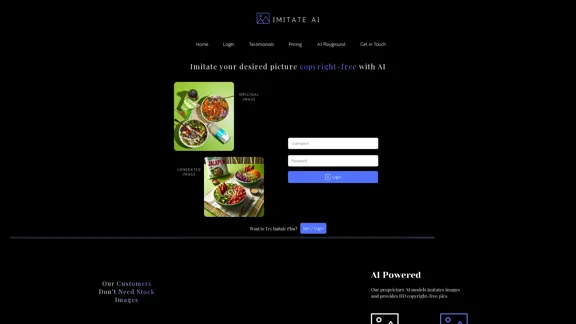
Imitate your desired picture copyright-free with AI
Visit Website
Mimic AI
Visit Website

Introduction

Imitate is an AI-powered platform designed to generate copyright-free images that resemble user-provided reference pictures. This tool aims to simplify the creative process for designers and content creators by offering an alternative to traditional stock images. With its user-friendly interface and advanced AI technology, Imitate allows users to quickly produce unique visuals for various purposes, including social media content and advertising materials.

Feature

  1. AI-Powered Image Generation

    • Creates copyright-free images based on user-provided references
    • Utilizes advanced AI technology to analyze and replicate image styles
  2. User-Friendly Interface

    • Simple one-step process for image creation
    • Accessible to users with varying levels of design experience
  3. Versatile Applications

    • Suitable for creating Instagram posts
    • Useful for composing Facebook advertisements
    • Capable of formulating complete social media content
  4. Multiple Service Tiers

    • Offers different plans to cater to various user needs
    • Includes "Pro" and "Plus" options for enhanced features
  5. AI Playground

    • Provides an interactive space for users to experiment with the AI technology
    • Allows for hands-on experience with the image generation process
  6. Customer Support

    • Offers direct communication channels for inquiries
    • Provides option to book calls for personalized assistance

FAQ

What is Imitate?

Imitate is an AI-powered platform that generates copyright-free images resembling user-provided reference pictures, designed to simplify the creative process for designers and content creators.

How does Imitate work?

Users upload a reference image, and Imitate's AI technology analyzes and creates a similar, copyright-free version in one simple step.

What can I use Imitate for?

Imitate can be used to create content for various purposes, including Instagram posts, Facebook advertisements, and general social media content.

Is Imitate suitable for non-designers?

Yes, Imitate's user-friendly interface makes it accessible to anyone, regardless of their design experience.

Are the images generated by Imitate copyright-free?

Yes, all images created using Imitate are copyright-free, allowing users to use them without legal concerns.

How can I get support if I have questions?

You can contact Imitate directly at [email protected] or book a call for personalized assistance.

Evaluation

  1. Imitate offers an innovative solution to the common challenge of finding suitable, copyright-free images for various creative projects. Its AI-powered approach to generating images based on user references is a significant advantage in the current digital content landscape.

  2. The platform's emphasis on simplicity and accessibility is commendable, making it a valuable tool for both professional designers and those with limited design experience. This democratization of design capabilities could potentially lead to more diverse and unique visual content across various media platforms.

  3. The inclusion of an AI Playground feature is a smart addition, allowing users to experiment and better understand the capabilities of the technology. This hands-on approach can help users optimize their results and may lead to more creative applications of the tool.

  4. While the concept is promising, the true test of Imitate's value will lie in the quality and versatility of the generated images. The platform's success will depend on its ability to consistently produce high-quality, diverse images that truly capture the essence of the reference images while remaining unique and copyright-free.

  5. The multiple service tiers suggest a scalable business model, which is positive. However, without specific pricing information, it's difficult to assess the value proposition for different user segments.

  6. Areas for potential improvement could include more detailed information about the AI's learning process and ethical considerations, as well as clearer guidelines on the extent of similarity between reference and generated images to ensure originality and avoid potential copyright issues.

Latest Traffic Insights

  • Monthly Visits

    0

  • Bounce Rate

    0.00%

  • Pages Per Visit

    0.00

  • Time on Site(s)

    0.00

  • Global Rank

    -

  • Country Rank

    -

Recent Visits

Traffic Sources

  • Social Media:
    0.00%
  • Paid Referrals:
    0.00%
  • Email:
    0.00%
  • Referrals:
    0.00%
  • Search Engines:
    0.00%
  • Direct:
    0.00%
More Data

Related Websites

Text to Voice Generator
==========================

A text-to-voice generator, also known as a text-to-speech (TTS) system, is a software that converts written text into a spoken voice output. This technology has been widely used in various applications, including virtual assistants, audiobooks, and language learning platforms.

How it Works
---------------

The process of generating voice from text involves several steps:

1. Text Analysis: The input text is analyzed to identify the language, syntax, and semantics.
2. Phonetic Transcription: The text is converted into a phonetic transcription, which represents the sounds of the spoken language.
3. Prosody Generation: The phonetic transcription is then used to generate the prosody, or rhythm and intonation, of the spoken voice.
4. Waveform Generation: The prosody and phonetic transcription are combined to generate the audio waveform, which is the final spoken voice output.

Types of Text-to-Voice Generators
-----------------------------------

There are two main types of text-to-voice generators:

Rule-Based Systems

These systems use a set of predefined rules to generate the spoken voice output. They are often limited in their ability to produce natural-sounding voices and may sound robotic.

Machine Learning-Based Systems

These systems use machine learning algorithms to learn from large datasets of spoken voices and generate more natural-sounding voices. They are often more advanced and can produce high-quality voice outputs.

Applications of Text-to-Voice Generators
-----------------------------------------

Text-to-voice generators have a wide range of applications, including:

Virtual Assistants

Virtual assistants, such as Siri and Alexa, use text-to-voice generators to respond to user queries.

Audiobooks

Text-to-voice generators can be used to create audiobooks from written texts, making it easier for people to access written content.

Language Learning

Language learning platforms use text-to-voice generators to provide pronunciation guidance and practice exercises for learners.

Accessibility

Text-to-voice generators can be used to assist people with disabilities, such as visual impairments, by providing an auditory interface to written content.
View Detail

Text to Voice Generator ========================== A text-to-voice generator, also known as a text-to-speech (TTS) system, is a software that converts written text into a spoken voice output. This technology has been widely used in various applications, including virtual assistants, audiobooks, and language learning platforms. How it Works --------------- The process of generating voice from text involves several steps: 1. Text Analysis: The input text is analyzed to identify the language, syntax, and semantics. 2. Phonetic Transcription: The text is converted into a phonetic transcription, which represents the sounds of the spoken language. 3. Prosody Generation: The phonetic transcription is then used to generate the prosody, or rhythm and intonation, of the spoken voice. 4. Waveform Generation: The prosody and phonetic transcription are combined to generate the audio waveform, which is the final spoken voice output. Types of Text-to-Voice Generators ----------------------------------- There are two main types of text-to-voice generators: Rule-Based Systems These systems use a set of predefined rules to generate the spoken voice output. They are often limited in their ability to produce natural-sounding voices and may sound robotic. Machine Learning-Based Systems These systems use machine learning algorithms to learn from large datasets of spoken voices and generate more natural-sounding voices. They are often more advanced and can produce high-quality voice outputs. Applications of Text-to-Voice Generators ----------------------------------------- Text-to-voice generators have a wide range of applications, including: Virtual Assistants Virtual assistants, such as Siri and Alexa, use text-to-voice generators to respond to user queries. Audiobooks Text-to-voice generators can be used to create audiobooks from written texts, making it easier for people to access written content. Language Learning Language learning platforms use text-to-voice generators to provide pronunciation guidance and practice exercises for learners. Accessibility Text-to-voice generators can be used to assist people with disabilities, such as visual impairments, by providing an auditory interface to written content.

Text to Voice Generator ========================== A text-to-voice generator, also known as a text-to-speech (TTS) system, is a software that converts written text into a spoken voice output. This technology has been widely used in various applications, including virtual assistants, audiobooks, and language learning platforms. How it Works --------------- The process of generating voice from text involves several steps: 1. Text Analysis: The input text is analyzed to identify the language, syntax, and semantics. 2. Phonetic Transcription: The text is converted into a phonetic transcription, which represents the sounds of the spoken language. 3. Prosody Generation: The phonetic transcription is then used to generate the prosody, or rhythm and intonation, of the spoken voice. 4. Waveform Generation: The prosody and phonetic transcription are combined to generate the audio waveform, which is the final spoken voice output. Types of Text-to-Voice Generators ----------------------------------- There are two main types of text-to-voice generators: Rule-Based Systems These systems use a set of predefined rules to generate the spoken voice output. They are often limited in their ability to produce natural-sounding voices and may sound robotic. Machine Learning-Based Systems These systems use machine learning algorithms to learn from large datasets of spoken voices and generate more natural-sounding voices. They are often more advanced and can produce high-quality voice outputs. Applications of Text-to-Voice Generators ----------------------------------------- Text-to-voice generators have a wide range of applications, including: Virtual Assistants Virtual assistants, such as Siri and Alexa, use text-to-voice generators to respond to user queries. Audiobooks Text-to-voice generators can be used to create audiobooks from written texts, making it easier for people to access written content. Language Learning Language learning platforms use text-to-voice generators to provide pronunciation guidance and practice exercises for learners. Accessibility Text-to-voice generators can be used to assist people with disabilities, such as visual impairments, by providing an auditory interface to written content.

Generate Voice from Text on Any Web Page With the advancement of technology, it is now possible to generate voice from text on any web page. This feature is particularly useful for people who prefer listening to content rather than reading it. Here's how you can do it: #Method 1: Using Browser Extension You can use a browser extension like Read Aloud or SpeakIt! to generate voice from text on any web page. These extensions are available for both Google Chrome and Mozilla Firefox browsers. #Method 2: Using Online Tools There are several online tools available that can convert text to speech. Some popular tools include NaturalReader, Voice Dream Reader, and Google Text-to-Speech. You can copy and paste the text from any web page into these tools to generate voice. #Method 3: Using Screen Reader If you are using a Windows operating system, you can use the built-in Narrator screen reader to generate voice from text on any web page. For Mac users, you can use VoiceOver. By using any of these methods, you can easily generate voice from text on any web page and enjoy a more convenient and accessible reading experience.

193.90 M
MusicHero.ai: Free AI Music Generator from Text Online
View Detail

MusicHero.ai: Free AI Music Generator from Text Online

MusicHero.ai: Free AI Music Generator from Text Online

Generate high-quality music quickly with the advanced AI music generator. Platforms like MusicHero.ai, powered by Suno V3.5 technology, offer AI music generator free online services. Create music from text or lyrics effortlessly with this versatile text to music AI tool.

577.73 K
Grab 'n Tag
View Detail

Grab 'n Tag

Grab 'n Tag

Download a group of images at once and give each one a name based on what's in the picture.

193.90 M
Unblur Image

Unblur image refers to the process of removing blur or haze from an image to make it sharper and clearer. This technique is often used to enhance the quality of images that have been affected by camera shake, motion blur, or other factors that cause blur.
View Detail

Unblur Image Unblur image refers to the process of removing blur or haze from an image to make it sharper and clearer. This technique is often used to enhance the quality of images that have been affected by camera shake, motion blur, or other factors that cause blur.

Unblur Image Unblur image refers to the process of removing blur or haze from an image to make it sharper and clearer. This technique is often used to enhance the quality of images that have been affected by camera shake, motion blur, or other factors that cause blur.

Automatically unblur images in one click with our AI photo blur remover.

193.90 M
Voice Master: Voice Recognition and Speech-to-Text Converter
View Detail

Voice Master: Voice Recognition and Speech-to-Text Converter

Voice Master: Voice Recognition and Speech-to-Text Converter

Allows you to speak and have your words recognized as text, which is then added to the text parts of the webpage.

193.90 M
Komiko | Create Comics and Webtoons with AI
View Detail

Komiko | Create Comics and Webtoons with AI

Komiko | Create Comics and Webtoons with AI

Bring your stories to life with AI. Create captivating comics, webtoon, and visual stories. Design original characters and dive into limitless story worlds.

743.50 K
Free Instant Influencer Search Tool - Find the Best Match for Your Influencer
View Detail

Free Instant Influencer Search Tool - Find the Best Match for Your Influencer

Free Instant Influencer Search Tool - Find the Best Match for Your Influencer

Receive instant research and discover the most relevant influencers with our AI-driven platform. Find YouTube influencers. Find the best fit TikTok & Instagram influencers.

0
Midjourney
View Detail

Midjourney

Midjourney

An independent research laboratory investigating novel modes of thinking and enhancing the creative capabilities of humanity.

17.37 M