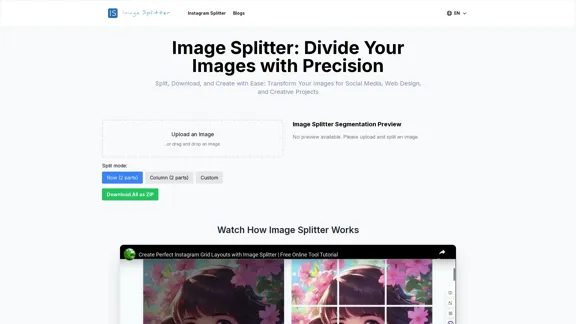
Image Splitter is a free online tool designed to divide large images into multiple smaller parts with precision. It offers a user-friendly interface for splitting images according to user-specified rows and columns, or simply dividing them into halves. This versatile tool caters to various needs in social media, web design, printing, image processing, and creative projects.
Effortless Image Splitting Tool for Creative Projects
Easily split large images online into smaller parts for social media, web design, and creative projects with our intuitive Image Splitter tool.
Introduction
Feature
-
Multiple Splitting Modes
- Row split (2 parts)
- Column split (2 parts)
- Custom split (user-defined rows and columns)
-
Supported Image Formats
- JPG, PNG, GIF, BMP, and other common formats
-
Real-time Preview
- Instant visualization of the splitting effect
-
Download Options
- Individual piece download
- Batch download as ZIP file
-
User-friendly Interface
- Drag-and-drop or click-to-upload functionality
- Responsive design for various devices
-
No Registration Required
- Immediate access without account creation
-
Privacy Protection
- Client-side processing without server storage
-
Flexible Customization
- Up to 20x20 grid split in custom mode
How to Use?
-
For optimal performance, upload images smaller than 10MB.
-
Use the custom split mode for more complex divisions, such as 3x3 or 4x4 grids.
-
Hover over split images in the preview area to reveal individual download buttons.
-
Utilize the "Download All as ZIP" feature for convenient batch downloading.
-
For uneven splits, pre-edit your image before uploading to the Image Splitter.
-
Experiment with different splitting modes to achieve the desired effect for your project.
-
Remember that the tool maintains original image quality, but format conversions may have a slight impact.
FAQ
Is the Image Splitter free to use?
Yes, the Image Splitter tool is completely free to use with all features available at no charge.
Do I need to register or log in to use the Image Splitter?
No registration or login is required. You can directly access the webpage and start using the tool immediately.
Can I upload multiple images for splitting at once?
Currently, the tool processes one image at a time. However, you can quickly delete the current image and upload a new one for consecutive operations.
Are the split images saved on your servers?
No, all image processing is done in your browser. The tool doesn't store your images or split results on its servers.
Is there a size limit for uploaded images?
To ensure optimal tool performance, it's recommended to upload images no larger than 10MB. Larger images may affect processing speed or cause browser lag.
Evaluation
-
The Image Splitter tool offers a straightforward and efficient solution for dividing images, catering to various needs across different industries and creative projects.
-
Its user-friendly interface and responsive design make it accessible to users of all skill levels, from beginners to professionals.
-
The tool's privacy-focused approach, processing images client-side without server storage, is a significant advantage in today's data-conscious environment.
-
While the tool excels in its primary function, it could benefit from additional features such as adjustable split sizes or basic image editing capabilities.
-
The limitation on file size (10MB recommendation) might be restrictive for users working with high-resolution images, suggesting room for optimization in handling larger files.
-
Overall, the Image Splitter provides a valuable, free service that effectively meets the needs of most users in image splitting tasks, with potential for further enhancements to broaden its appeal and functionality.
Related Websites
Upload a few selfies, Select your preferred styles, Receive over 100 professional headshots delivered on the same day.
1.05 K
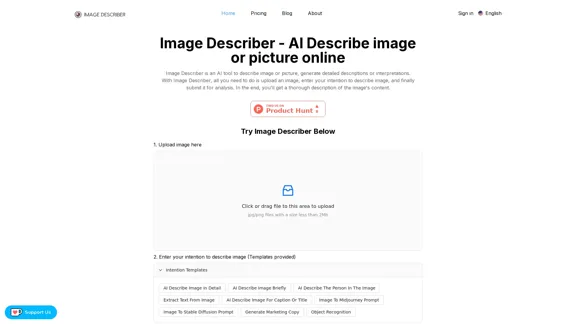
Image Describer - AI Describe Image or Picture Online With the advancement of Artificial Intelligence (AI), it is now possible to describe images or pictures online using an Image Describer. This innovative tool uses computer vision and machine learning algorithms to analyze and identify the contents of an image, generating a descriptive text of what it sees. How it Works The process is quite simple: 1. Upload an Image: You can upload an image or enter the URL of an online image to the Image Describer tool. 2. AI Analysis: The AI algorithm analyzes the image, detecting objects, people, animals, and other elements within the picture. 3. Generate Description: The AI generates a descriptive text based on the analysis, providing a clear and concise description of the image. Applications of Image Describer The Image Describer has numerous applications, including: * Accessibility: Helping visually impaired individuals to understand the content of an image. * E-commerce: Providing product descriptions for online shopping platforms. * Search Engine Optimization (SEO): Generating alt tags and descriptions for images to improve search engine rankings. * Content Creation: Assisting writers and content creators with image descriptions. Benefits of Image Describer The Image Describer offers several benefits, including: * Time-Saving: Automating the process of image description, saving time and effort. * Accuracy: Providing accurate and objective descriptions of images. * Efficiency: Enabling individuals to focus on other tasks while the AI handles image description. Try it Out Experience the power of AI-driven image description today! Upload an image or enter a URL to see the Image Describer in action.
Image Describer - AI Describe Image or Picture Online With the advancement of Artificial Intelligence (AI), it is now possible to describe images or pictures online using an Image Describer. This innovative tool uses computer vision and machine learning algorithms to analyze and identify the contents of an image, generating a descriptive text of what it sees. How it Works The process is quite simple: 1. Upload an Image: You can upload an image or enter the URL of an online image to the Image Describer tool. 2. AI Analysis: The AI algorithm analyzes the image, detecting objects, people, animals, and other elements within the picture. 3. Generate Description: The AI generates a descriptive text based on the analysis, providing a clear and concise description of the image. Applications of Image Describer The Image Describer has numerous applications, including: * Accessibility: Helping visually impaired individuals to understand the content of an image. * E-commerce: Providing product descriptions for online shopping platforms. * Search Engine Optimization (SEO): Generating alt tags and descriptions for images to improve search engine rankings. * Content Creation: Assisting writers and content creators with image descriptions. Benefits of Image Describer The Image Describer offers several benefits, including: * Time-Saving: Automating the process of image description, saving time and effort. * Accuracy: Providing accurate and objective descriptions of images. * Efficiency: Enabling individuals to focus on other tasks while the AI handles image description. Try it Out Experience the power of AI-driven image description today! Upload an image or enter a URL to see the Image Describer in action.AI Image Describer is a tool to describe images or pictures online. It can be used as an image description and caption generator. Additionally, it supports image-to-prompt and text extraction from photos.
5.16 K
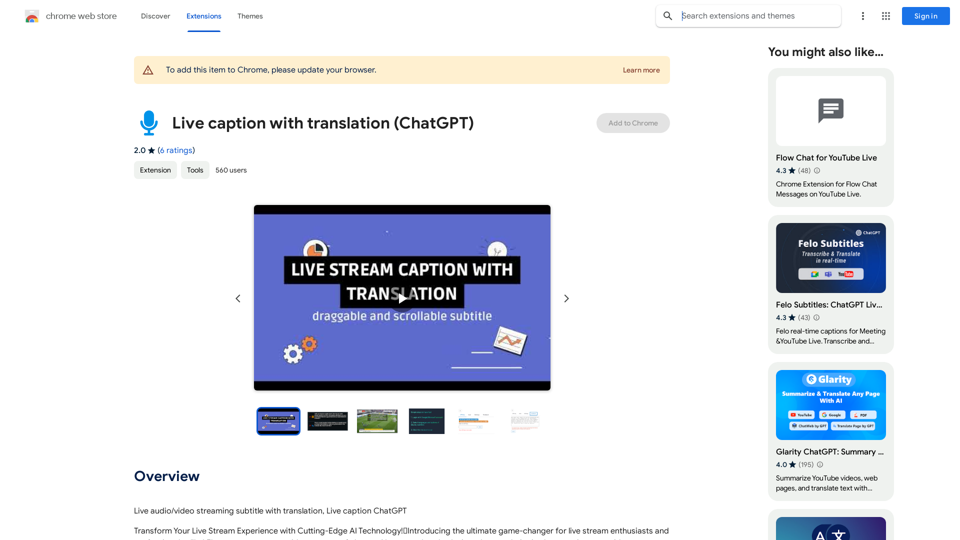
Live audio/video streaming with subtitles and translation, Live captions powered by ChatGPT
193.90 M
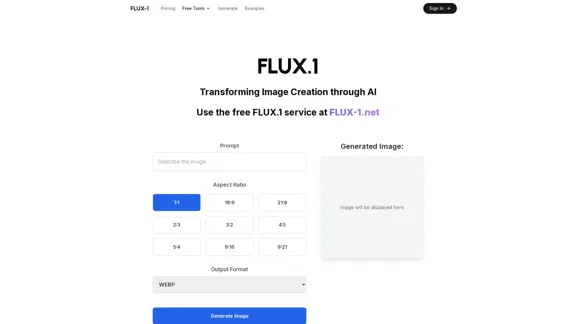
Free Flux.1 | Flux | flux image generator | FLUX-1.net
Free Flux.1 | Flux | flux image generator | FLUX-1.netFree FLUX.1, online FLUX, FLUX ai image generator, FLUX-1.net
149
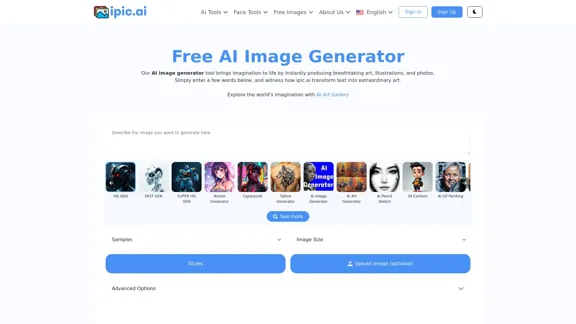
AI Powered Image Generator for Unique and Custom Images
AI Powered Image Generator for Unique and Custom ImagesCreate unique and custom images effortlessly with iPic.Ai - the AI-powered image generator.
68.28 K
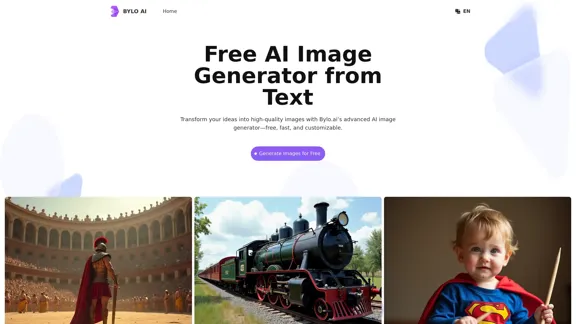
Bylo.ai: The Best Free AI Image Generator for Converting Text to Images
Bylo.ai: The Best Free AI Image Generator for Converting Text to ImagesBylo.ai is the best free AI image generator online that transforms text into stunning visuals. With advanced features like negative prompts and the Flux AI image generator, customize settings to create professional-quality images quickly.
1.57 M