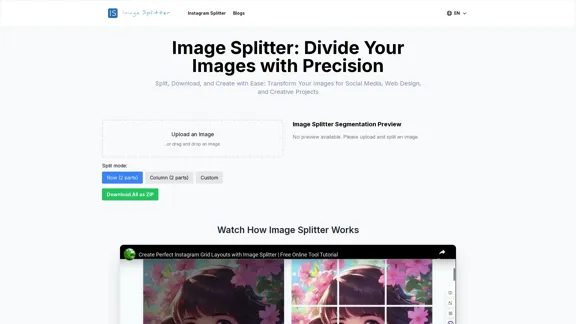
Image Splitter is a free online tool designed to divide large images into multiple smaller parts with precision. It offers a user-friendly interface for splitting images according to user-specified rows and columns, or simply dividing them into halves. This versatile tool caters to various needs in social media, web design, printing, image processing, and creative projects.
Effortless Image Splitting Tool for Creative Projects
Easily split large images online into smaller parts for social media, web design, and creative projects with our intuitive Image Splitter tool.
Introduction
Feature
-
Multiple Splitting Modes
- Row split (2 parts)
- Column split (2 parts)
- Custom split (user-defined rows and columns)
-
Supported Image Formats
- JPG, PNG, GIF, BMP, and other common formats
-
Real-time Preview
- Instant visualization of the splitting effect
-
Download Options
- Individual piece download
- Batch download as ZIP file
-
User-friendly Interface
- Drag-and-drop or click-to-upload functionality
- Responsive design for various devices
-
No Registration Required
- Immediate access without account creation
-
Privacy Protection
- Client-side processing without server storage
-
Flexible Customization
- Up to 20x20 grid split in custom mode
How to Use?
-
For optimal performance, upload images smaller than 10MB.
-
Use the custom split mode for more complex divisions, such as 3x3 or 4x4 grids.
-
Hover over split images in the preview area to reveal individual download buttons.
-
Utilize the "Download All as ZIP" feature for convenient batch downloading.
-
For uneven splits, pre-edit your image before uploading to the Image Splitter.
-
Experiment with different splitting modes to achieve the desired effect for your project.
-
Remember that the tool maintains original image quality, but format conversions may have a slight impact.
FAQ
Is the Image Splitter free to use?
Yes, the Image Splitter tool is completely free to use with all features available at no charge.
Do I need to register or log in to use the Image Splitter?
No registration or login is required. You can directly access the webpage and start using the tool immediately.
Can I upload multiple images for splitting at once?
Currently, the tool processes one image at a time. However, you can quickly delete the current image and upload a new one for consecutive operations.
Are the split images saved on your servers?
No, all image processing is done in your browser. The tool doesn't store your images or split results on its servers.
Is there a size limit for uploaded images?
To ensure optimal tool performance, it's recommended to upload images no larger than 10MB. Larger images may affect processing speed or cause browser lag.
Evaluation
-
The Image Splitter tool offers a straightforward and efficient solution for dividing images, catering to various needs across different industries and creative projects.
-
Its user-friendly interface and responsive design make it accessible to users of all skill levels, from beginners to professionals.
-
The tool's privacy-focused approach, processing images client-side without server storage, is a significant advantage in today's data-conscious environment.
-
While the tool excels in its primary function, it could benefit from additional features such as adjustable split sizes or basic image editing capabilities.
-
The limitation on file size (10MB recommendation) might be restrictive for users working with high-resolution images, suggesting room for optimization in handling larger files.
-
Overall, the Image Splitter provides a valuable, free service that effectively meets the needs of most users in image splitting tasks, with potential for further enhancements to broaden its appeal and functionality.
Related Websites
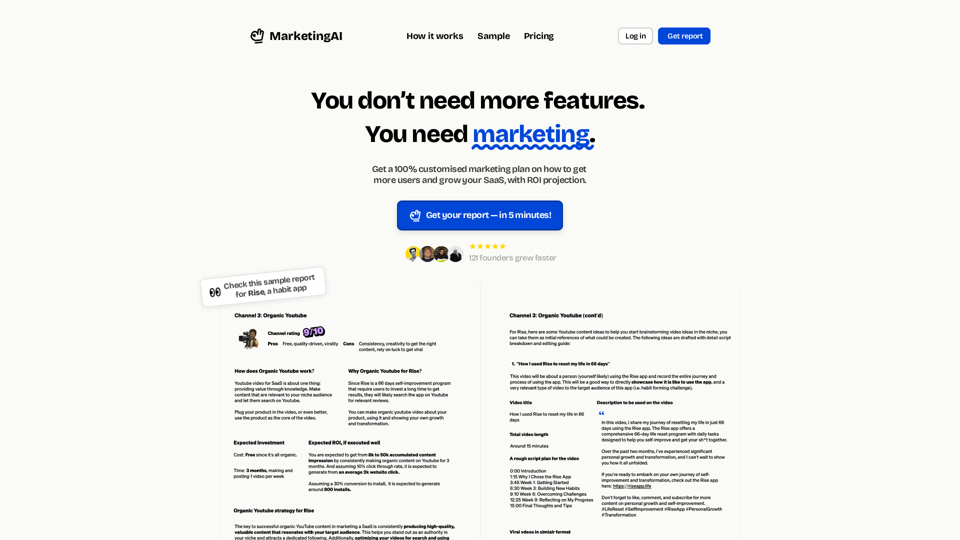
MarketingAI: You don't need more features. You need marketing.
MarketingAI: You don't need more features. You need marketing.Get a 15-page marketing action plan tailored to your SaaS business, including a step-by-step guide on acquiring users and a projected return on investment (ROI).
0
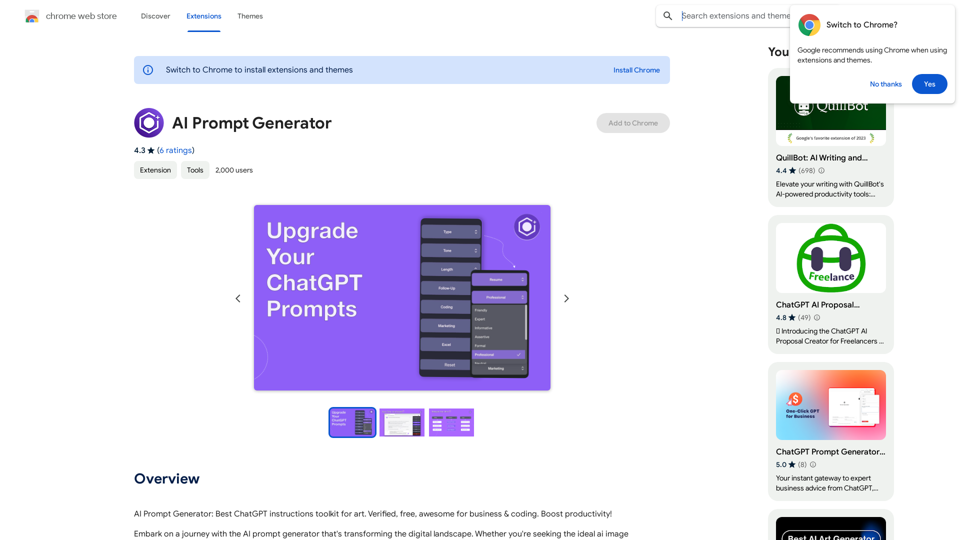
AI Prompt Generator: The Ultimate ChatGPT Instructions Toolkit for Art Verified, free, and awesome for business and coding. This toolkit is designed to boost your productivity!
193.90 M
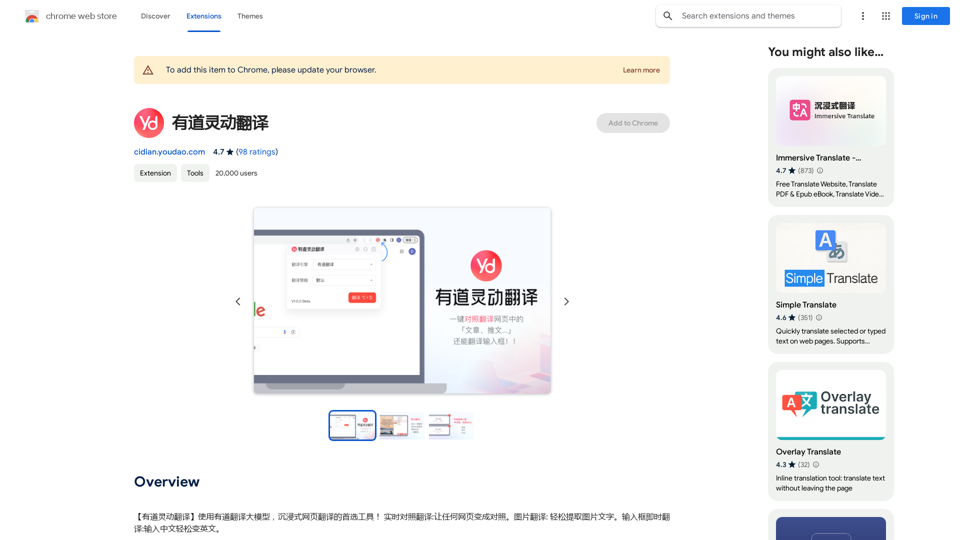
【Youdao Lingdong Translation】Using Youdao's large translation model, the top choice for immersive web translation tools! Real-time contrast translation: Turn any web page into a contrast. Image translation: Easily extract text from images. Instant translation input box: Enter Chinese and easily convert to English.
193.90 M
FLUX.1 AI: Advanced Text-to-Image Generation Model
FLUX.1 AI: Advanced Text-to-Image Generation ModelExperience the next level of image synthesis with FLUX.1 AI. Our cutting-edge AI technology creates stunning, diverse, and highly detailed images from text prompts.
152
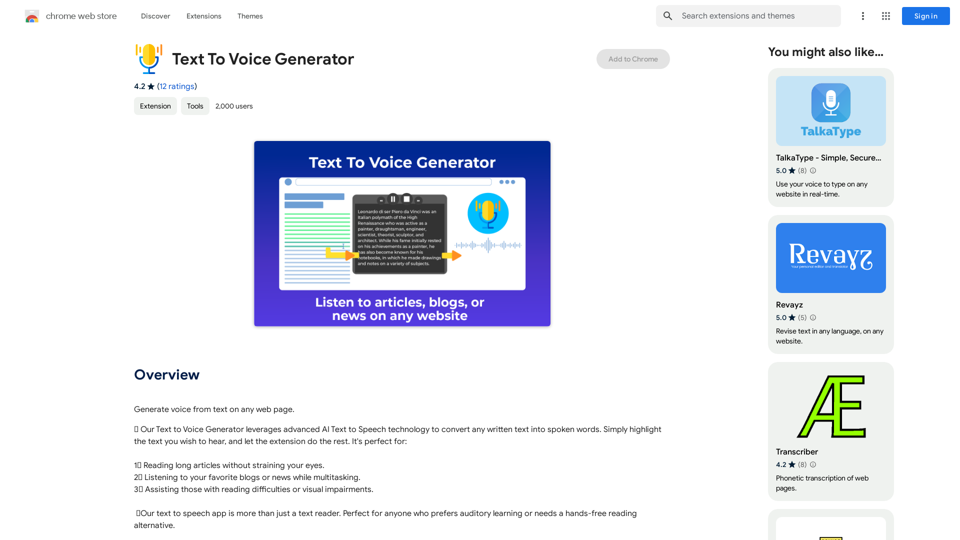
Text to Voice Generator ========================== A text-to-voice generator, also known as a text-to-speech (TTS) system, is a software that converts written text into a spoken voice output. This technology has been widely used in various applications, including virtual assistants, audiobooks, and language learning platforms. How it Works --------------- The process of generating voice from text involves several steps: 1. Text Analysis: The input text is analyzed to identify the language, syntax, and semantics. 2. Phonetic Transcription: The text is converted into a phonetic transcription, which represents the sounds of the spoken language. 3. Prosody Generation: The phonetic transcription is then used to generate the prosody, or rhythm and intonation, of the spoken voice. 4. Waveform Generation: The prosody and phonetic transcription are combined to generate the audio waveform, which is the final spoken voice output. Types of Text-to-Voice Generators ----------------------------------- There are two main types of text-to-voice generators: Rule-Based Systems These systems use a set of predefined rules to generate the spoken voice output. They are often limited in their ability to produce natural-sounding voices and may sound robotic. Machine Learning-Based Systems These systems use machine learning algorithms to learn from large datasets of spoken voices and generate more natural-sounding voices. They are often more advanced and can produce high-quality voice outputs. Applications of Text-to-Voice Generators ----------------------------------------- Text-to-voice generators have a wide range of applications, including: Virtual Assistants Virtual assistants, such as Siri and Alexa, use text-to-voice generators to respond to user queries. Audiobooks Text-to-voice generators can be used to create audiobooks from written texts, making it easier for people to access written content. Language Learning Language learning platforms use text-to-voice generators to provide pronunciation guidance and practice exercises for learners. Accessibility Text-to-voice generators can be used to assist people with disabilities, such as visual impairments, by providing an auditory interface to written content.
Text to Voice Generator ========================== A text-to-voice generator, also known as a text-to-speech (TTS) system, is a software that converts written text into a spoken voice output. This technology has been widely used in various applications, including virtual assistants, audiobooks, and language learning platforms. How it Works --------------- The process of generating voice from text involves several steps: 1. Text Analysis: The input text is analyzed to identify the language, syntax, and semantics. 2. Phonetic Transcription: The text is converted into a phonetic transcription, which represents the sounds of the spoken language. 3. Prosody Generation: The phonetic transcription is then used to generate the prosody, or rhythm and intonation, of the spoken voice. 4. Waveform Generation: The prosody and phonetic transcription are combined to generate the audio waveform, which is the final spoken voice output. Types of Text-to-Voice Generators ----------------------------------- There are two main types of text-to-voice generators: Rule-Based Systems These systems use a set of predefined rules to generate the spoken voice output. They are often limited in their ability to produce natural-sounding voices and may sound robotic. Machine Learning-Based Systems These systems use machine learning algorithms to learn from large datasets of spoken voices and generate more natural-sounding voices. They are often more advanced and can produce high-quality voice outputs. Applications of Text-to-Voice Generators ----------------------------------------- Text-to-voice generators have a wide range of applications, including: Virtual Assistants Virtual assistants, such as Siri and Alexa, use text-to-voice generators to respond to user queries. Audiobooks Text-to-voice generators can be used to create audiobooks from written texts, making it easier for people to access written content. Language Learning Language learning platforms use text-to-voice generators to provide pronunciation guidance and practice exercises for learners. Accessibility Text-to-voice generators can be used to assist people with disabilities, such as visual impairments, by providing an auditory interface to written content.Generate Voice from Text on Any Web Page With the advancement of technology, it is now possible to generate voice from text on any web page. This feature is particularly useful for people who prefer listening to content rather than reading it. Here's how you can do it: #Method 1: Using Browser Extension You can use a browser extension like Read Aloud or SpeakIt! to generate voice from text on any web page. These extensions are available for both Google Chrome and Mozilla Firefox browsers. #Method 2: Using Online Tools There are several online tools available that can convert text to speech. Some popular tools include NaturalReader, Voice Dream Reader, and Google Text-to-Speech. You can copy and paste the text from any web page into these tools to generate voice. #Method 3: Using Screen Reader If you are using a Windows operating system, you can use the built-in Narrator screen reader to generate voice from text on any web page. For Mac users, you can use VoiceOver. By using any of these methods, you can easily generate voice from text on any web page and enjoy a more convenient and accessible reading experience.
193.90 M
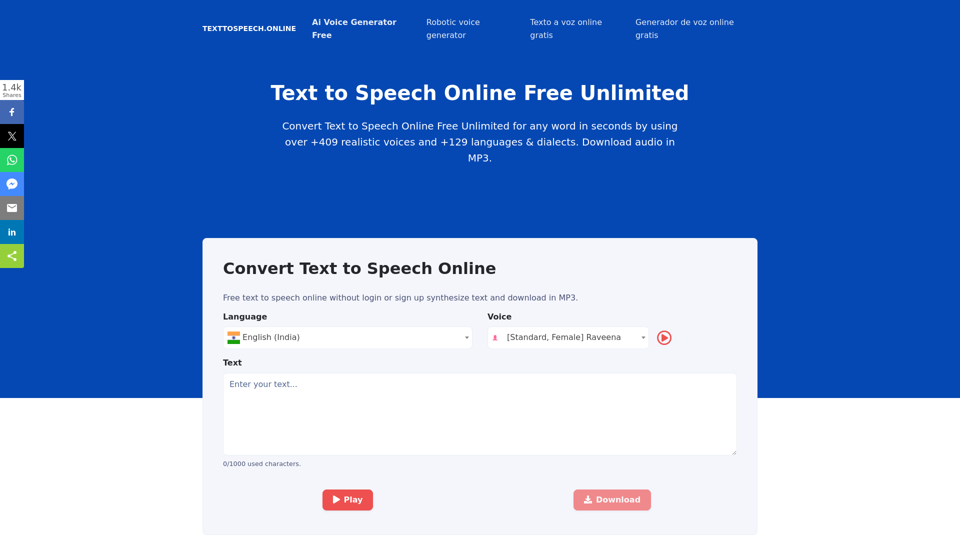
Text To Speech Online Free Unlimited. Service with natural sounding voices. Convert any text into MP3 audio file and download on your Mobile or PC..
67.62 K
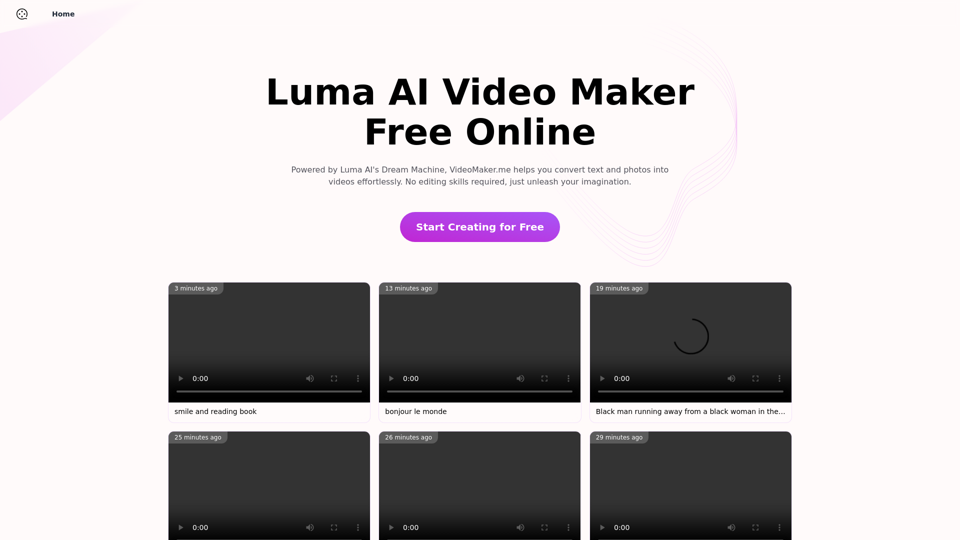
Luma AI Video Generator Free Online - Convert Text and Photos to Video at VideoMaker.me
Luma AI Video Generator Free Online - Convert Text and Photos to Video at VideoMaker.meDiscover the power of Luma AI's Dream Machine, an advanced video generator that transforms text and images into high-quality, dynamic videos. Ideal for creators, marketers, and innovators, videomaker.me brings your visual ideas to life with stunning realism and versatility.
397.91 K