Comparing Similarity for nb.no Book and Image Search Results
Let's explore how to measure the similarity between:
* Book search results from nb.no (the Norwegian National Library)
* Image search results from various sources
This comparison can be valuable for understanding:
* How well visual representations match textual descriptions.
* Potential for using images to enhance book discovery.
* Developing new search functionalities that combine text and image data.
We can use various techniques to assess similarity, including:
* Textual Similarity: Analyzing the keywords, topics, and overall content of book descriptions and image captions.
* Visual Similarity: Comparing the visual features of images using algorithms like convolutional neural networks (CNNs).
* Hybrid Approaches: Combining textual and visual similarity measures for a more comprehensive evaluation.
By comparing similarity scores across different methods, we can gain insights into the strengths and weaknesses of each approach and identify the most effective way to connect books and images.

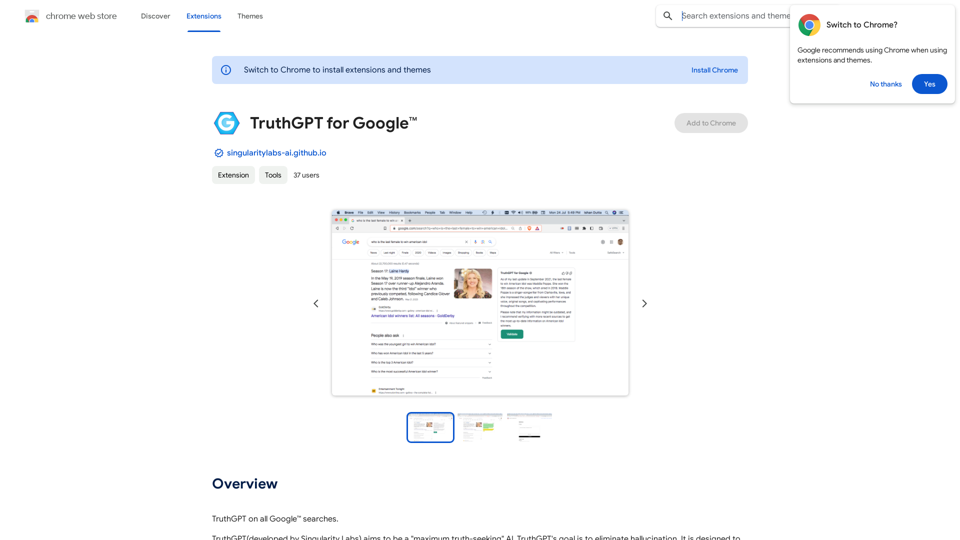
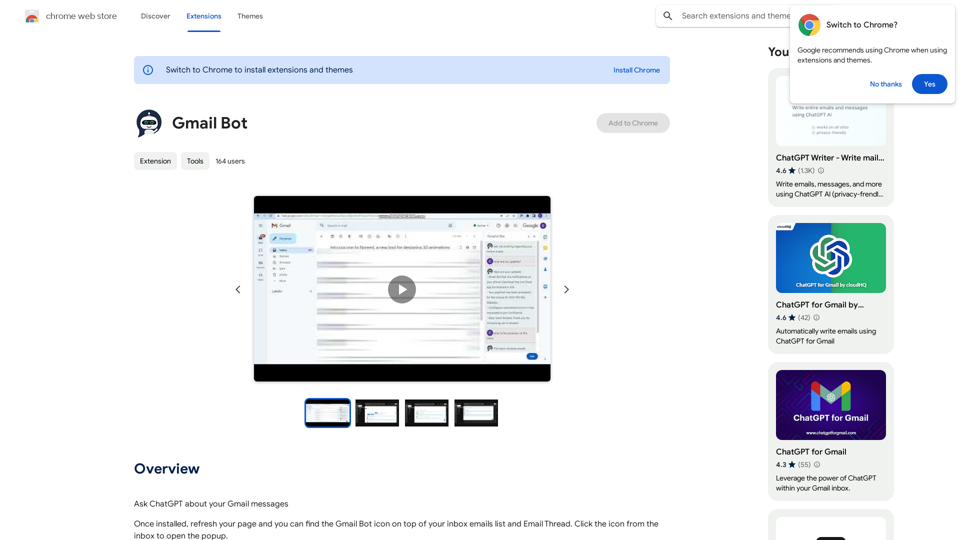
Using ChatGPT in a browser popup window without having to switch tabs.

Lexicore is an AI-powered chatbot designed to be a virtual legal assistant. It can give you quick answers and accurate information to help you with your legal questions.

This extension changes the links for images and YouTube videos in ChatGPT or GPT messages into tags that show the images and videos directly.

Identifying People Expressions in Google Meets Calls
This is a complex task with several challenges:
* Technical Limitations: Google Meets doesn't currently offer an API to directly access facial expressions of participants.
* Privacy Concerns: Analyzing facial expressions raises significant privacy issues. Users should have control over whether their expressions are being tracked and used.
* Accuracy: Even with access to facial data, accurately interpreting expressions can be difficult due to variations in lighting, angles, and individual differences.
Possible Approaches (with limitations):
* User-Submitted Data: Participants could manually indicate their emotions during the call, which could be collected and analyzed. This relies on user honesty and may not capture subtle expressions.
* Third-Party Tools: Some external tools might analyze video feeds and attempt to detect expressions. However, their accuracy and privacy practices should be carefully evaluated.
* Future Developments: Google or other companies might develop features that allow for more ethical and accurate expression analysis in the future.
It's important to remember that facial expressions are just one aspect of communication, and relying solely on them can be misleading.

Unlock efficiency and elevate your business with Adaapt.ai - Your partner in automation. Streamline processes effortlessly and boost productivity. Discover cutting-edge solutions tailored for your success.