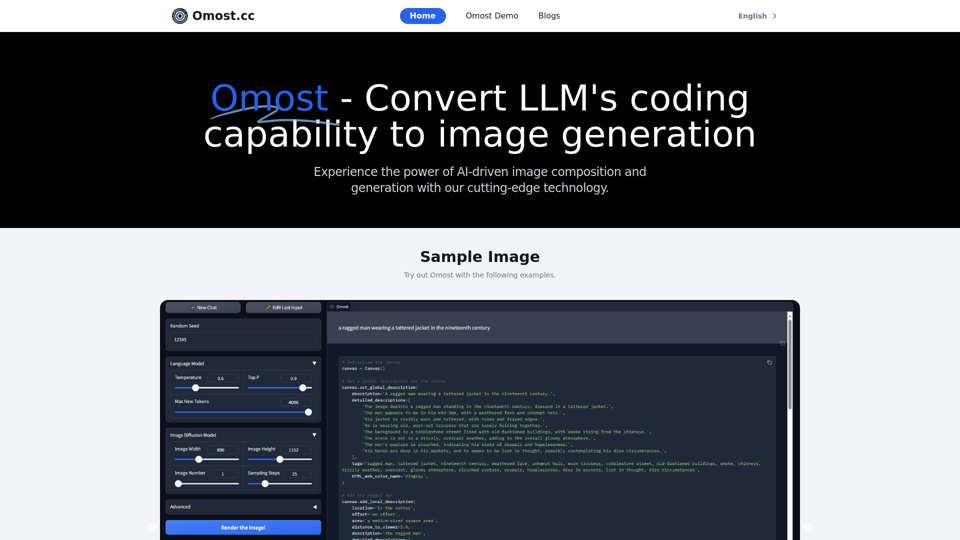
Omost is an innovative project that harnesses the power of Large Language Models (LLMs) to transform coding capabilities into image generation and composition. This cutting-edge technology allows users to create high-quality images from simple text prompts, revolutionizing the creative process and enhancing efficiency in visual content creation.
Omost | Try Omost for Free Online - AI-Powered Image Generation from Code
Omost offers large language model (LLM) models that can generate code to create visual images using Omost's virtual Canvas agent.
Introduction
Feature
LLM-Powered Image Generation
Omost utilizes pretrained LLM models to write codes that compose visual contents on a virtual Canvas, which are then rendered by image generators. This unique approach combines the power of language models with image creation techniques.
Multiple Pretrained Models
The platform offers three pretrained models based on variations of Llama3 and Phi3, providing users with diverse options for image generation.
Free Stable Video Diffusion Tool
Users can access the Stable Video Diffusion tool online for free, expanding the possibilities of AI-driven content creation.
Text-to-Image Generation
With Omost, users can generate stunning images from simple text prompts, making complex image creation accessible to everyone.
User-Friendly Interface
The platform is designed to be easy to use, allowing users to explore different models and features without extensive technical knowledge.
Experimental Playground
Omost encourages users to experiment with various text prompts and parameters, fostering creativity and innovation in image generation.
FAQ
What is Omost?
Omost is a project that leverages Large Language Models (LLMs) to convert coding capabilities into image generation and composition. It enables users to create high-quality images from simple text prompts.
How does Omost work?
Omost uses pretrained LLM models to write codes that compose visual contents on a virtual Canvas, which are then rendered by image generators. This innovative approach combines language processing with image creation techniques.
Is Omost free to use?
Yes, users can try the Stable Video Diffusion tool for free online. However, more advanced features or extended access may require a paid subscription.
What models does Omost use?
Omost offers three pretrained models based on variations of Llama3 and Phi3, providing users with diverse options for image generation.
How can I get the best results with Omost?
To maximize your experience with Omost:
- Explore the available models and features
- Experiment with different text prompts and parameters
- Don't hesitate to try new approaches and push the boundaries of what's possible
Related Websites
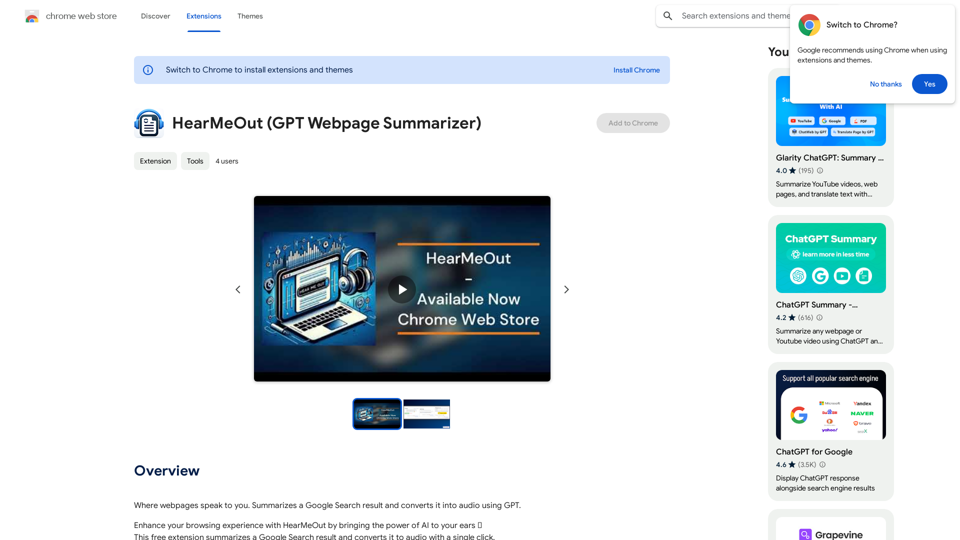
Where webpages speak to you. Summarizes a Google Search result and converts it into audio using GPT.
193.90 M
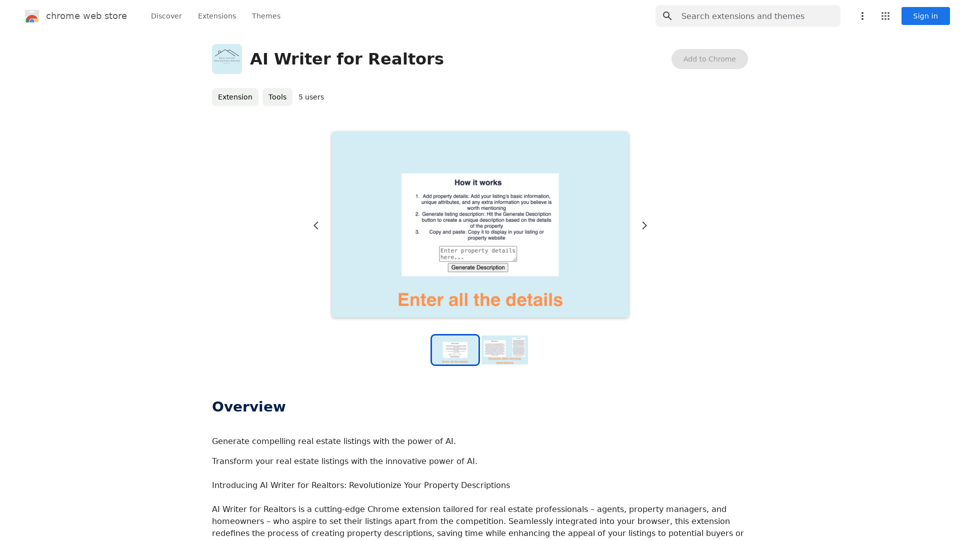
AI Writer for Realtors This AI-powered writing tool is designed to help real estate agents save time and create compelling content. Here's what it can do: * Generate property descriptions: Craft engaging and informative descriptions that highlight key features and benefits. * Write listing headlines: Create attention-grabbing headlines that attract potential buyers. * Compose social media posts: Share property updates, market insights, and client testimonials in a concise and engaging way. * Draft email campaigns: Automate email marketing efforts with personalized messages to potential clients. * Summarize property reports: Quickly understand key information from property reports and market analyses. Benefits for Realtors: * Save time and effort: Automate repetitive writing tasks and focus on client interactions. * Improve content quality: Generate high-quality, engaging content that resonates with target audiences. * Boost marketing effectiveness: Create compelling content that drives leads and increases sales. * Stay ahead of the competition: Leverage AI technology to streamline your workflow and deliver exceptional service.
AI Writer for Realtors This AI-powered writing tool is designed to help real estate agents save time and create compelling content. Here's what it can do: * Generate property descriptions: Craft engaging and informative descriptions that highlight key features and benefits. * Write listing headlines: Create attention-grabbing headlines that attract potential buyers. * Compose social media posts: Share property updates, market insights, and client testimonials in a concise and engaging way. * Draft email campaigns: Automate email marketing efforts with personalized messages to potential clients. * Summarize property reports: Quickly understand key information from property reports and market analyses. Benefits for Realtors: * Save time and effort: Automate repetitive writing tasks and focus on client interactions. * Improve content quality: Generate high-quality, engaging content that resonates with target audiences. * Boost marketing effectiveness: Create compelling content that drives leads and increases sales. * Stay ahead of the competition: Leverage AI technology to streamline your workflow and deliver exceptional service.Unlock the Power of AI for Captivating Real Estate Listings Tired of crafting bland, forgettable property descriptions? Let AI revolutionize your listings and attract more potential buyers! Here's how AI can elevate your real estate game: * Craft Compelling Narratives: AI can weave engaging stories around your properties, highlighting their unique features and benefits in a way that resonates with buyers. * Optimize for Search Engines: AI-powered tools can analyze market trends and keywords to ensure your listings rank higher in search results, boosting visibility and attracting more clicks. * Personalize the Experience: AI can tailor descriptions to specific buyer demographics, creating a more personalized and impactful connection. * Generate Stunning Visuals: From virtual tours to 3D floor plans, AI can enhance your listings with captivating visuals that showcase your properties in their best light. Stop settling for ordinary listings. Embrace the future of real estate with AI-powered descriptions that captivate, convert, and close deals.
193.90 M
Find the perfect gift for any occasion with AI-powered gift suggestions. Get personalized recommendations for easy and stress-free gift giving.
193.90 M
A small program that can read aloud any Reddit posts, audiobooks, or webpages using the highest quality text-to-speech technology.
193.90 M
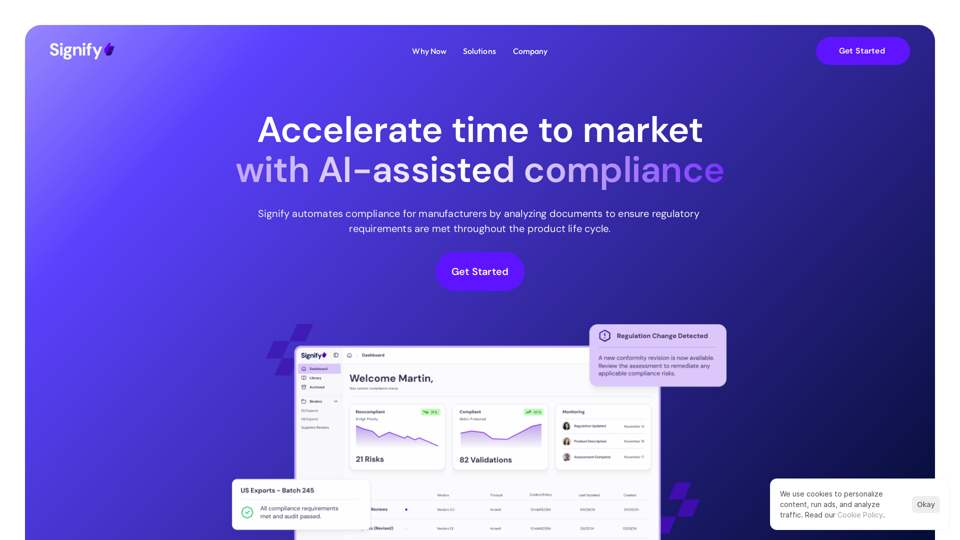
Signify - Compliance Management System for Manufacturing
Signify - Compliance Management System for ManufacturingSignify automates compliance for manufacturers by analyzing documents to ensure regulatory requirements are met throughout the product lifecycle.
3.17 K