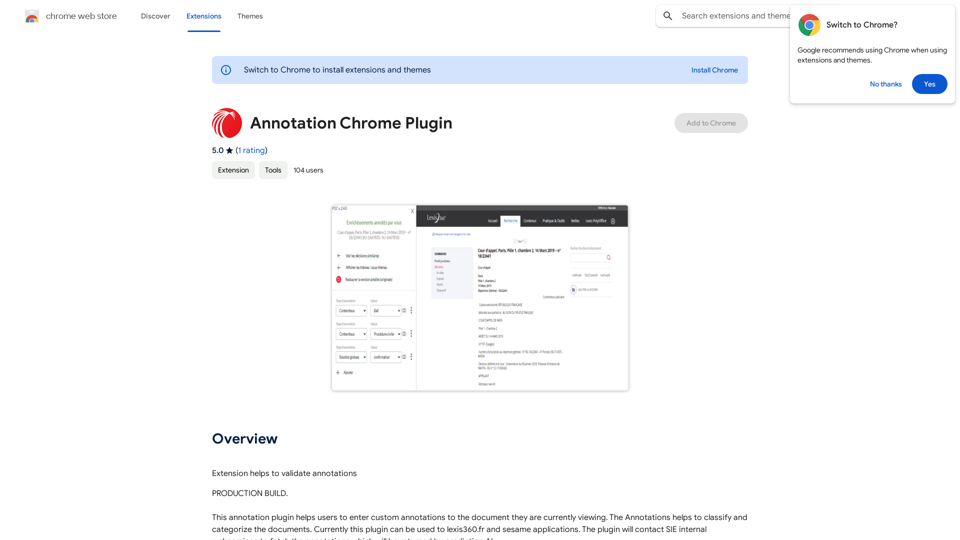
Annotation Chrome Plugin is a powerful browser extension designed to enhance document management and organization. It allows users to add custom annotations to documents they are viewing, facilitating classification and categorization. Currently compatible with lexis360.fr and sesame applications, this plugin integrates with SIE internal webservices to fetch AI-predicted annotations, streamlining the document analysis process.
Annotation Chrome Plugin
This extension helps to validate annotations.
Introduction
Feature
Custom Annotation Capability
Users can easily add personalized annotations to documents they are viewing, enhancing document organization and retrieval.
Document Classification and Categorization
The plugin aids in efficiently classifying and categorizing documents, improving information management and accessibility.
Integration with SIE Internal Webservices
Leverages AI prediction technology to fetch relevant annotations, enhancing the accuracy and efficiency of the annotation process.
Compatibility with Specific Applications
Currently supports lexis360.fr and sesame applications, catering to specific user needs in these platforms.
User-Friendly Installation
Simple installation process via the Chrome Web Store, with easy-to-follow setup instructions for immediate use.
Cost-Effective Solution
Offered as a free extension, making it accessible to all users without any financial barriers.
FAQ
What is the primary function of the Annotation Chrome Plugin?
The Annotation Chrome Plugin allows users to add custom annotations to documents they are viewing, facilitating document classification and categorization.
Which applications are currently supported by the plugin?
The plugin currently supports lexis360.fr and sesame applications.
Is there a cost associated with using the Annotation Chrome Plugin?
No, the Annotation Chrome Plugin is a free extension and does not require any subscription or payment.
How does the plugin fetch annotations?
The plugin contacts SIE internal webservices to retrieve annotations that are generated by prediction AI.
Where can users find installation instructions for the plugin?
Users can install the plugin from the Chrome Web Store and follow the provided prompts for setup.
Related Websites
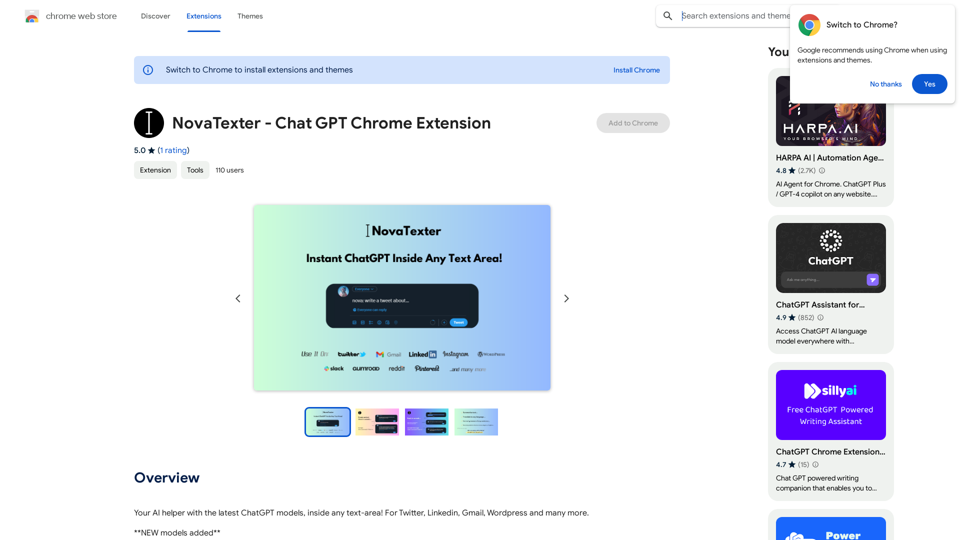
Your AI assistant powered by the latest ChatGPT models, right inside any text box! For Twitter, LinkedIn, Gmail, WordPress, and many other platforms.
193.90 M
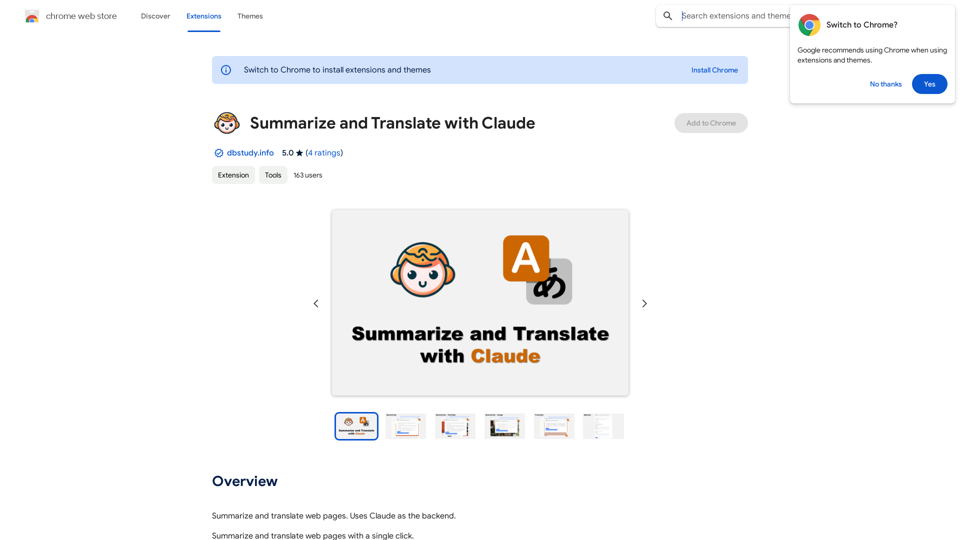
Please provide me with the text you'd like me to summarize and translate. I'm ready! 😊
Please provide me with the text you'd like me to summarize and translate. I'm ready! 😊I can help you with that! Just paste the web page URL here, and I'll use Claude's powerful abilities to: * Summarize the main points of the page in clear, concise language. * Translate the entire page into English for you. Let me know if you have a page you'd like me to work on!
193.90 M
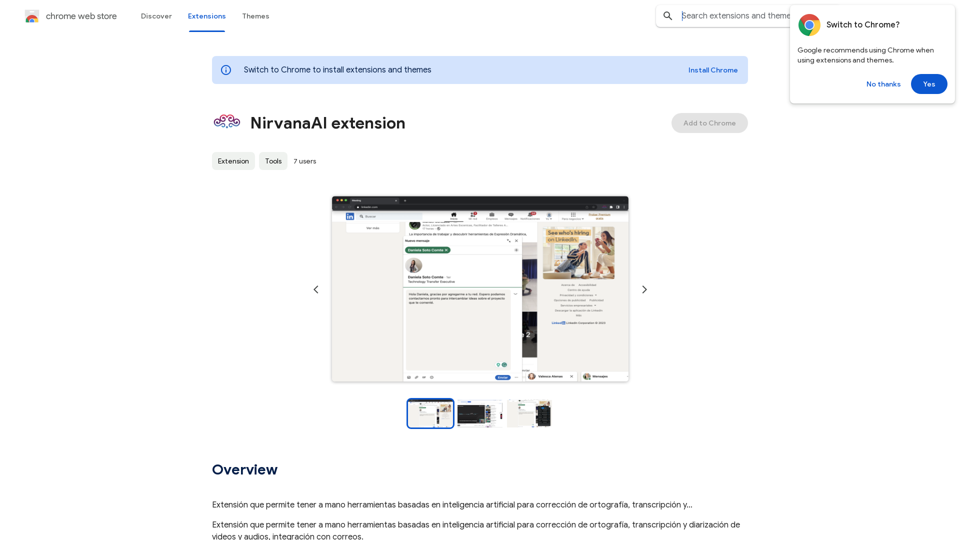
Extension that allows you to have AI-powered tools for grammar correction, transcription, and...
193.90 M
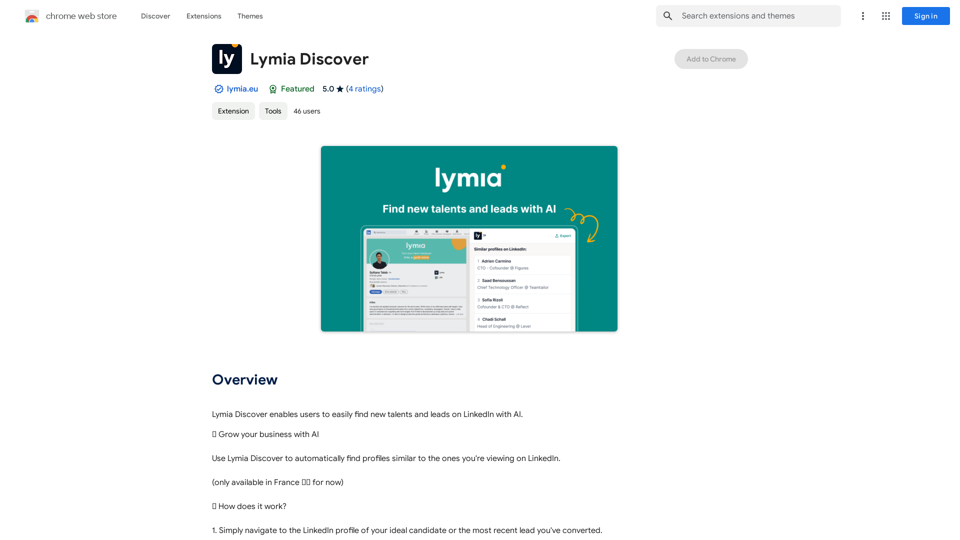
Lymia Discover helps users easily find new talents and leads on LinkedIn using artificial intelligence.
193.90 M
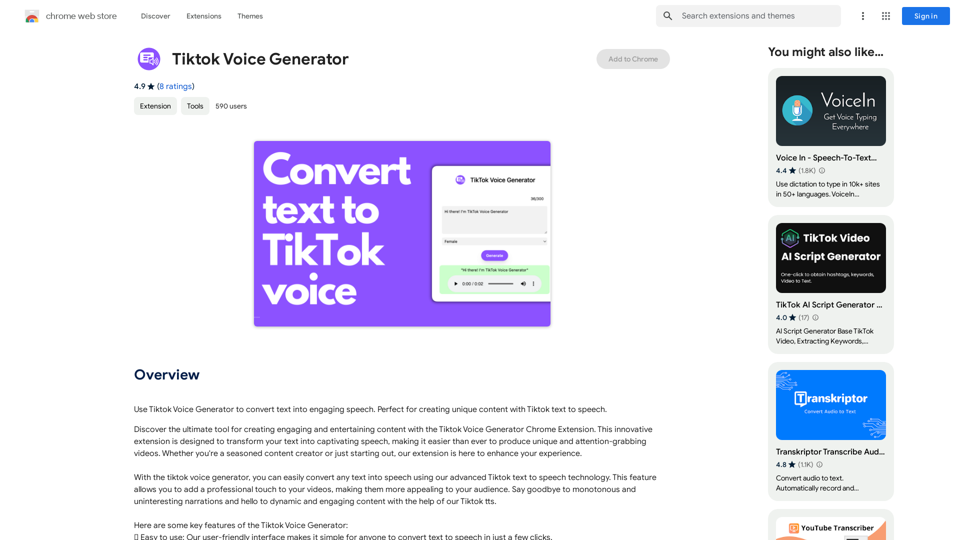
TikTok Voice Generator ========================== The TikTok voice generator is a popular feature on the social media platform that allows users to create and share videos with unique and entertaining voiceovers. This feature has become a sensation among TikTok users, with many using it to add humor, creativity, and personality to their videos. How Does it Work? -------------------- The TikTok voice generator uses advanced AI technology to convert written text into a spoken voice. Users can type in the text they want to convert, and the generator will produce a natural-sounding voiceover in a matter of seconds. The voice generator offers a range of voices, accents, and languages to choose from, allowing users to customize their voiceovers to fit their style and preferences. Features and Benefits ------------------------- Variety of Voices The TikTok voice generator offers a vast library of voices, including male and female voices, different accents, and languages. This allows users to experiment with different voices and find the one that best suits their content. Easy to Use The voice generator is incredibly easy to use. Users simply need to type in the text they want to convert, select the voice they want to use, and the generator will do the rest. Add Humor and Creativity The TikTok voice generator is a great way to add humor and creativity to videos. Users can use the generator to create funny voiceovers, parody songs, or even create their own characters. Increase Engagement Videos with voiceovers generated by the TikTok voice generator tend to perform better in terms of engagement. The unique and entertaining voiceovers can help capture viewers' attention and increase the chances of going viral. Conclusion ---------- The TikTok voice generator is a powerful tool that can help users take their content to the next level. With its advanced AI technology, ease of use, and variety of voices, it's no wonder why it has become a favorite among TikTok users. Whether you're looking to add humor, creativity, or personality to your videos, the TikTok voice generator is definitely worth trying out.
TikTok Voice Generator ========================== The TikTok voice generator is a popular feature on the social media platform that allows users to create and share videos with unique and entertaining voiceovers. This feature has become a sensation among TikTok users, with many using it to add humor, creativity, and personality to their videos. How Does it Work? -------------------- The TikTok voice generator uses advanced AI technology to convert written text into a spoken voice. Users can type in the text they want to convert, and the generator will produce a natural-sounding voiceover in a matter of seconds. The voice generator offers a range of voices, accents, and languages to choose from, allowing users to customize their voiceovers to fit their style and preferences. Features and Benefits ------------------------- Variety of Voices The TikTok voice generator offers a vast library of voices, including male and female voices, different accents, and languages. This allows users to experiment with different voices and find the one that best suits their content. Easy to Use The voice generator is incredibly easy to use. Users simply need to type in the text they want to convert, select the voice they want to use, and the generator will do the rest. Add Humor and Creativity The TikTok voice generator is a great way to add humor and creativity to videos. Users can use the generator to create funny voiceovers, parody songs, or even create their own characters. Increase Engagement Videos with voiceovers generated by the TikTok voice generator tend to perform better in terms of engagement. The unique and entertaining voiceovers can help capture viewers' attention and increase the chances of going viral. Conclusion ---------- The TikTok voice generator is a powerful tool that can help users take their content to the next level. With its advanced AI technology, ease of use, and variety of voices, it's no wonder why it has become a favorite among TikTok users. Whether you're looking to add humor, creativity, or personality to your videos, the TikTok voice generator is definitely worth trying out.Use the Tiktok Voice Generator to convert text into engaging speech. Perfect for creating unique content with Tiktok text to speech.
193.90 M